Why check your sewer line before a project in Monroe?
Monroe is wooded and spread out, and many homes here run to a septic tank rather than a town sewer. That often means a long run of buried pipe between the house and wherever the waste ends up, under a yard that may have changed a lot since the pipe went in. A patio slab, a row of fence posts, a new tree or an addition footing can land right on top of it.
Hitting the line during the dig is one problem. Building over it is the slower one. A pipe under a new patio or addition is hard to reach when it clogs, cracks or fills with roots years later, and the fix can mean cutting through what you just paid to build. Finding the line first lets you shift the project a few feet, or plan a way to reach the pipe, while the yard is still open.
Will Call Before You Dig mark my sewer line?
Usually not the part you're worried about. Connecticut's one-call center is run by Call Before You Dig, Inc., a non-profit set up by the owners of underground facilities under the direction of the state's Public Utilities Regulatory Authority. It takes your notice and relays it to the owners of the underground lines near your dig, and those owners mark their own.
The pipe running out of your house is generally a private line. Under the state's provisions, facilities owned by the owner of a private residence, for service solely to that residence, are excluded from what owners register with the clearinghouse, and the owners of registered facilities are the ones who mark them. The clearinghouse's own homeowner help page says it does not mark private facilities such as sprinkler systems, private electric lines, sewer laterals or security systems. So a dig ticket can come back with the utility lines marked and still leave your sewer or septic line unmarked.
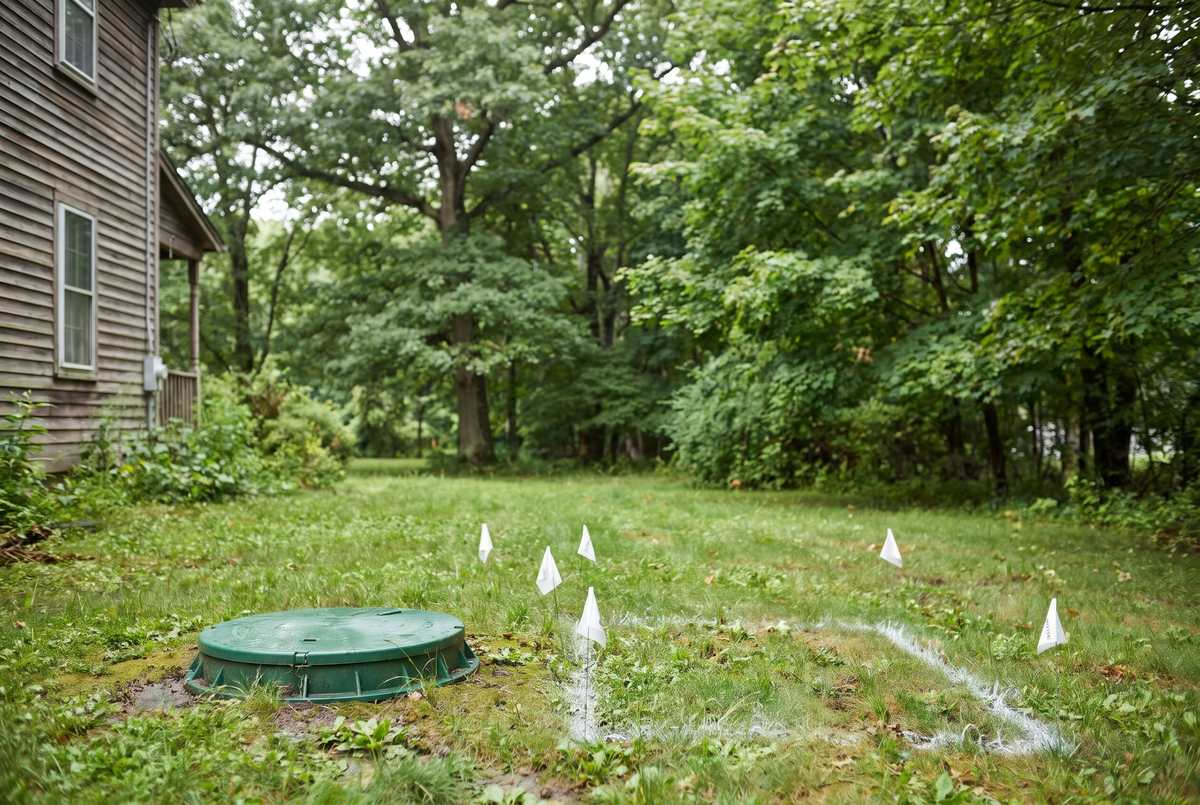
That doesn't make the ticket optional. Under the state's rules, a homeowner using power-operated equipment must call Call Before You Dig two full working days before digging, and if you hire a contractor, the contractor must make that call. If you dig by hand, calling is encouraged rather than required. In the state's color code, white paint or flags show the area you plan to dig. Finding your own sewer line is a separate job the ticket won't do for you.
What should you gather before the project starts?
Most of the prep is records and access. None of these gives you the full path, but together they tell you which part of the yard to treat with care and how the line can be reached.
- Find where the main drain leaves the house, usually a large pipe going through the basement wall or floor.
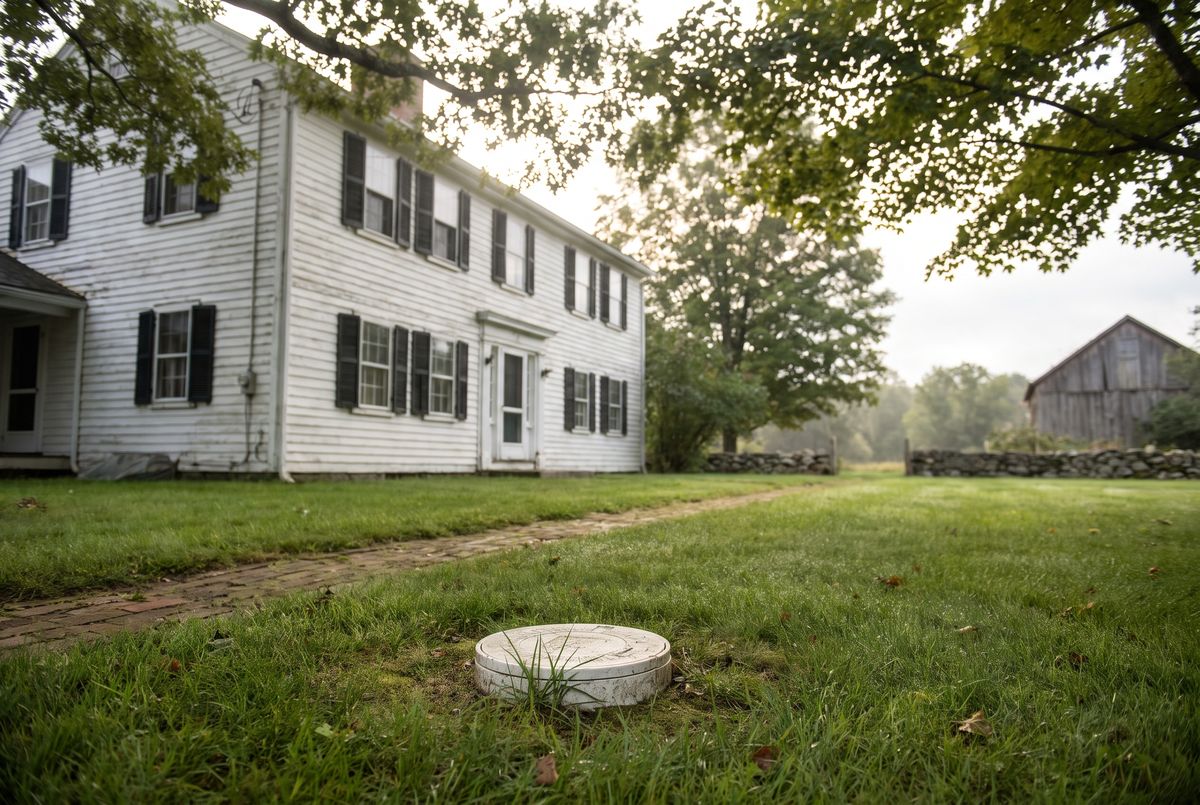
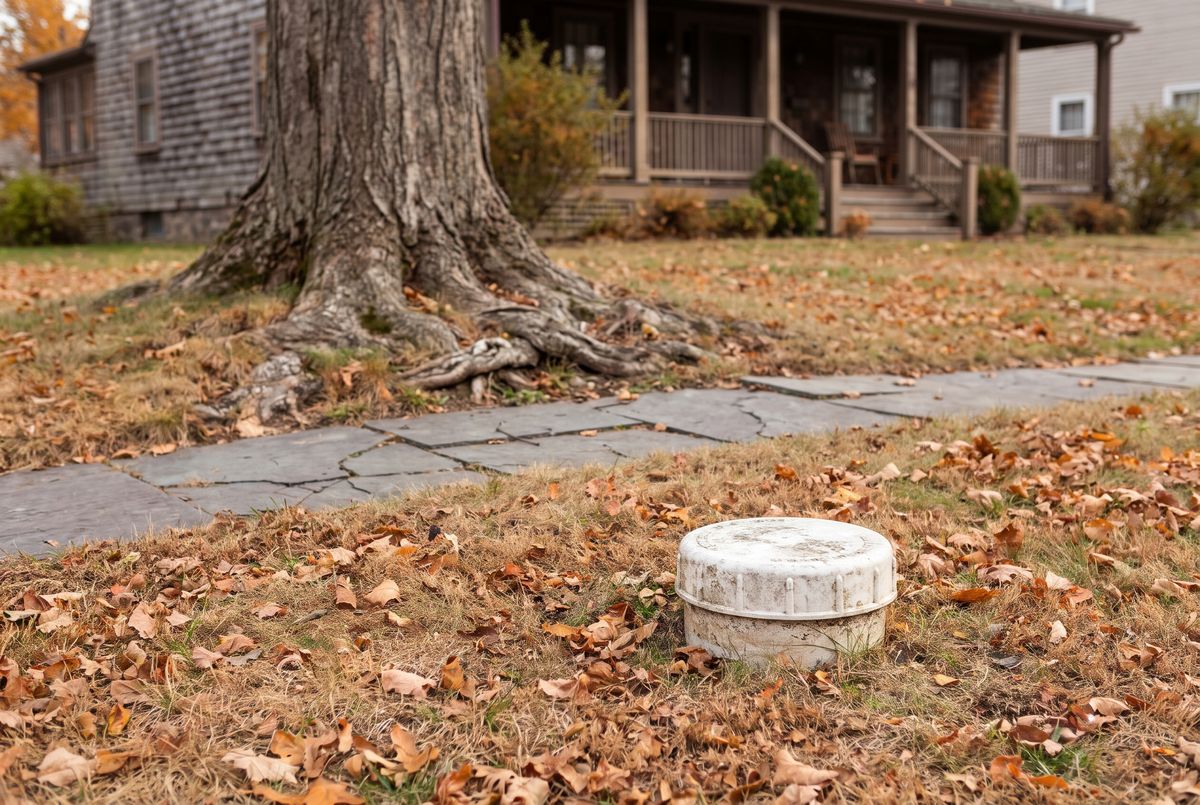
- Look for a cleanout cap in the lawn or near the foundation, often a short pipe with a screw cap.
- On a septic property, find the tank lid or riser, since the line runs between the house and the tank.
- Check any old survey or paperwork from the purchase for a drawn line, and treat it as a starting point only.
A straight line from the foundation to the cleanout or tank is a guess, not a map. Pipes turn, dip and get rerouted when a house is added on to, and on older lots the line may have gone in long before the driveway, the garage or the big tree that now sits on top of it. Depth is the other unknown, and depth decides whether a post-hole digger reaches the pipe.
Call (203) 943-8722 for a free estimate on locating your sewer or septic line before the work starts.
Call (203) 943-8722How do you lay out a Monroe project around the line?
The risk depends on how deep the project goes and how permanent it is. A garden bed can move next year. A slab or a footing can't, so those are the ones to plan around the pipe.
| Project | Risk to the line | What to mark first |
|---|---|---|
| Patio or walkway | A slab over the pipe blocks later access | The full path under the planned footprint |
| Fence posts | An auger or post-hole digger can hit a shallow pipe | Where the fence crosses the pipe, and its depth |
| New tree or shrub | Roots grow toward joints in older pipe | The path, so planting stays well away from it |
| Addition or deck footings | Footings can land on the pipe or force a reroute | The path and depth across the whole footprint |
| Pool or garden bed | Digging can expose or crack the pipe | The path, depth and any cleanout in the area |
Small layout changes usually do the work. A fence post can often move a foot or two along the line so it misses the pipe. A patio can stop short of the path or leave the cleanout outside the slab, and an addition can be drawn so its footings stay off the run. Each of those choices is easy on paper and hard once concrete is poured.
Trees deserve a note in Monroe, where a lot of homes sit on wooded lots. Roots from mature trees are a common cause of blocked sewer lines in general, and planting a new tree on top of the pipe adds one more. Our guide to tree roots in an older sewer line covers what happens once roots get in, and rooter service is how a root-choked line gets cleared. The Monroe service area page covers the septic lines and wet-ground problems that come up around town.
When should you book the locate, and what should be ready?
Book it once the outline of the patio, fence line or addition is marked on the ground, and before a contractor's start date, so the marked pipe can be read against the plan while there's still time to move things. Note where you think the cleanout or the septic lid is, and whether any drain in the house has been slow. Pipe locating traces the path and rough depth from inside the pipe, and it's usually paired with a camera inspection, which shows the pipe's condition before anything is built on top. If the line runs to a septic tank, our sewer and septic services cover the pipe from the house to the tank.
What affects the cost of locating a sewer line in Monroe?
Every line is different, so there's no single number for it. In general, what changes a locating job is access, meaning whether there's a usable cleanout or the camera has to go in another way, the length of the run out to the street or the septic tank, and whether a blockage has to be cleared before the camera can get through. We explain what we'll do and the price before any work starts, and estimates are free.
Call (203) 943-8722 for a free estimate on pipe locating in Monroe and across Fairfield County.
Call (203) 943-8722