
What should you do first about tree roots in a Stratford sewer line?
Get the roots cleared so water moves, then have a camera run through the line so you know whether the pipe itself is damaged. That order matters. A camera can't see much through a pipe packed with roots, and a cleared line with no footage leaves you guessing about the next clog. Lots of older homes in Stratford have big street trees out front, and the sewer line often runs under that front yard on its way to the main in the street.
| Your situation | What we'd do first | Why |
|---|---|---|
| First slow main, no history of trouble | Clear the roots with a cable machine | Gets water moving and confirms roots are the cause |
| Main clogs again months after a cleaning | Clear it, then run a camera | Roots returning to one spot point to an open joint |
| Buying an older house with big trees | Camera the line before closing | Shows the pipe's condition before it's yours |
| Camera shows a cracked or sagging section | Repair that section | Clearing can't close the gap the roots use |
| Sewage coming up a floor drain now | Call for emergency service | That's an active backup, not a planning job |
If two rows fit your house, go with the one lower in the table.
How do tree roots get into older sewer lines in Stratford?
Roots get in through joints and cracks, because a pipe with a tiny leak gives off moisture that roots grow toward. Older sewer lines were often laid in short lengths of clay tile or cast iron, so there's a joint every few feet. Over the decades those joints shift and the seals wear out. A hair-thin root slips into the gap, finds water and nutrients in the flow, and thickens inside the pipe.
Newer PVC lines have fewer joints, and they're glued, so roots have a harder time. Some older houses also have fiber pipe, which can soften and lose its shape with age. The mature trees along Stratford streets don't care what the pipe is made of, and their roots spread a long way under lawns and sidewalks.
What are the signs roots are growing into your main line?
The clearest sign is a main that clogs, gets cleared, then clogs again a few months later. In a house with a basement, the floor drain or a downstairs shower usually backs up first because it's the lowest drain. Toilets gurgle when the washing machine empties. Several fixtures run slow at the same time, which points past any one sink to the main.
Root growth picks up in the warm months, so a line that was fine in spring can be slow by fall. One slow bathroom sink is usually a local clog, and that's a job for drain cleaning, not the main.
Call us at (203) 943-8722 for a free estimate, and we'll explain what we'd check first.
Call (203) 943-8722When is clearing the roots enough?
Clearing is enough when the roots are thin and the pipe is otherwise sound, like a first clog in a line that's never given trouble. Our rooter service runs a cable machine with a cutting head through the main and cuts the roots off at the pipe wall. That usually gets water moving again.
Clearing doesn't touch the root outside the pipe. If the joint stays open, the roots come back. With one big maple out front and a pipe that's sound apart from a root joint or two, some Stratford homeowners just put clearing on a regular schedule. That's a fair choice once a camera has confirmed the pipe is in decent shape.
Why does a camera inspection come before any repair?
A camera shows where the roots come in and what shape the pipe is in, so nobody digs up the wrong spot. We run a camera inspection through the line from a cleanout, with no digging. The footage shows each joint, any cracks, a low spot that holds water, or a pipe that's pulled apart. It also shows how far out the problem sits, which matters on an older Stratford lot with a long run to the street.
Our advice: camera any older line that's needed clearing twice, and camera the line before you buy an older house with big trees in the yard.
When does a root-damaged section need repair?
Repair makes sense when the camera shows a cracked or broken section, a sag, or a joint so open that roots fill it soon after each clearing. At that point you're paying for cleanings that never fix the cause. Sewer repair replaces the damaged section, so the roots lose the opening they were using.
A sag in an older Stratford line deserves its own mention. Waste settles in the low spot, roots find the standing water, and the clog comes back faster. Clearing a sag helps for a while, although it doesn't change the pipe's shape.
What affects the cost of a root problem in Stratford?
Every line in Stratford is different, so cost depends mostly on what the camera finds and how hard the pipe is to reach.
| Factor | How it changes the job |
|---|---|
| Depth of the line | A deeper pipe means more digging to reach a bad section |
| Access point | A cleanout is easier to work from than a toilet or roof vent |
| What's on top | A driveway, walkway, patio or tree adds work |
| Pipe condition | One bad joint is a smaller job than a long cracked run |
We give free estimates, and we explain the repair and the price before any work starts.
A simple plan if you think roots are in your line
If you think roots are in your Stratford line, watch the drains, find the cleanout and get the main cleared before anything else.
- Note which drain backs up first and whether toilets gurgle when other fixtures drain.
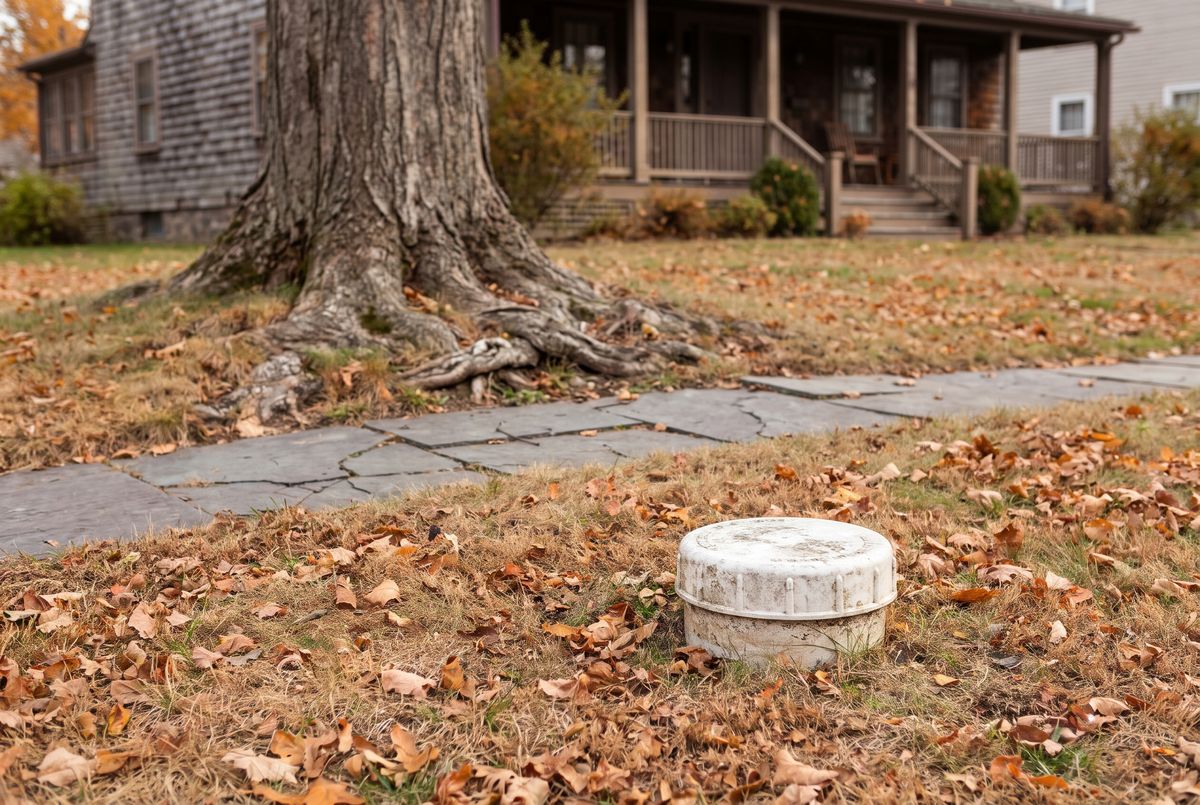
- Find your cleanout, usually a capped pipe in the basement or in the yard toward the street.
- Keep wipes and grease out of the drains while the line is slow.
- Call us to clear the main so water moves again.
- Ask for a camera run once the line is clear.
- Choose between scheduled clearing and repair based on what the footage shows.
If sewage is already coming up a floor drain, that's our emergency plumbing page, not this one. Stop using water in the house, keep people and pets away from it, then call.
Call (203) 943-8722 for a free estimate on clearing, a camera inspection or a repair.
Call (203) 943-8722