How do you check whether the drain under the lawn is clogged?
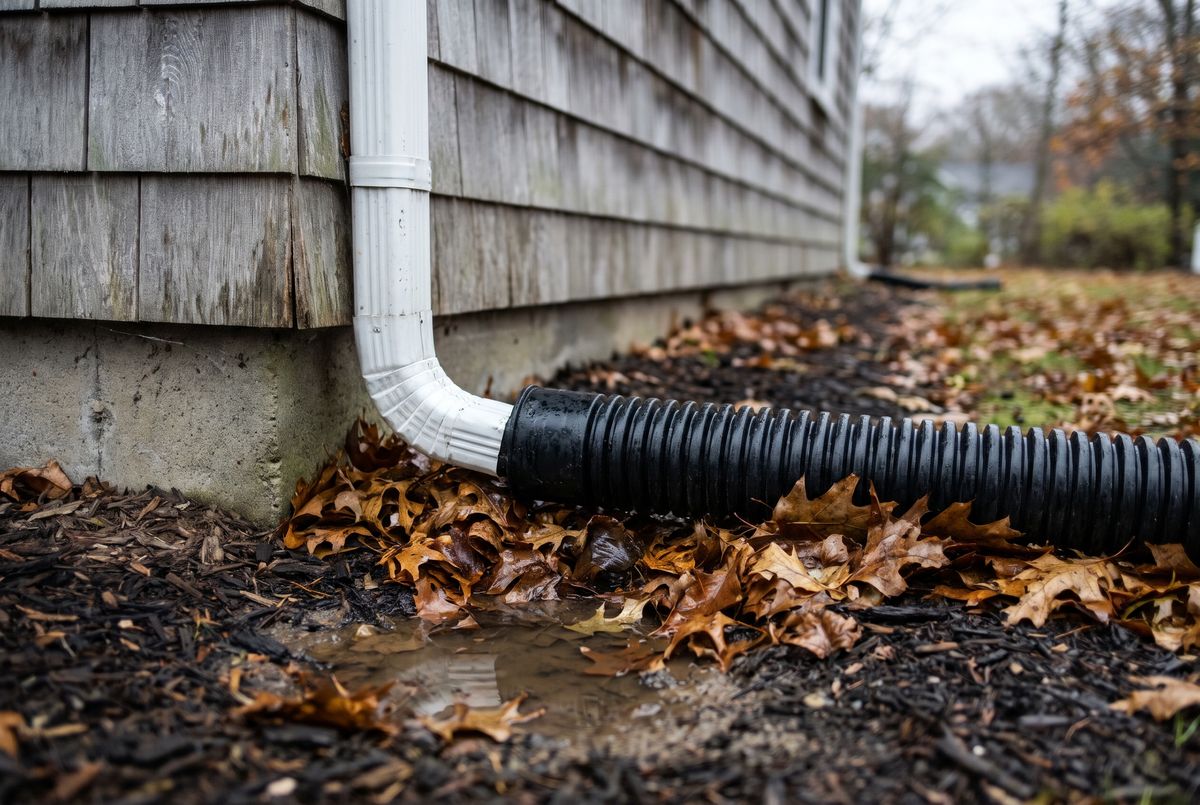
Watch where the water escapes in the next steady rain, then run a hose test. On many houses the downspout doesn't end on the grass. It runs into a pipe in the ground, and that pipe carries the roof water out to the yard, the street or a dry well. The buried part is out of sight, so the only way to read it is to watch what the water does at each end.
If water backs up where the downspout meets the ground, the trouble is usually underground. So is water that goes into the ground pipe but never comes out where it ends, even in a heavy storm. A gutter spilling over usually means a full gutter, though a blocked downspout can cause it too, so check both before you look underground. The table and the checklist below are clues to work through, not a verdict.
In Westport it's worth checking every fall. There is heavy tree cover around Compo Beach and Greens Farms, and many larger lots have plenty of drainage underground: area drains, French drains and dry wells as well as downspout lines. Our Westport service area page covers the town's drainage in more detail.
Is it the gutter, the downspout or the pipe underground?
Where the water escapes tells you where it's stuck. Water usually comes out just above the blockage, so watch where it spills.
| What you see in the rain | Where the clog probably is | What to look at |
|---|---|---|
| Water spills over the gutter edge along its length | The gutter, or the downspout below it | Leaves in the gutter and at its outlet |
| The gutter fills up by the downspout and the downspout barely runs | The top of the downspout | Leaves packed at the opening where the gutter drains |
| Water leaks from a joint partway down the downspout | The downspout below that joint | A bend or elbow packed with leaves |
| Water backs up or bubbles out where the downspout meets the ground | The buried pipe, or a full dry well at its end | The hose test below |
| Water goes into the ground but never comes out at the far end | The buried pipe or its outlet | Whether the outlet is covered over |
What can you check yourself before you call?
Quite a lot, and most of it from the ground. Leave the ladder for a dry day, and leave a second-floor gutter to someone with the right ladder.
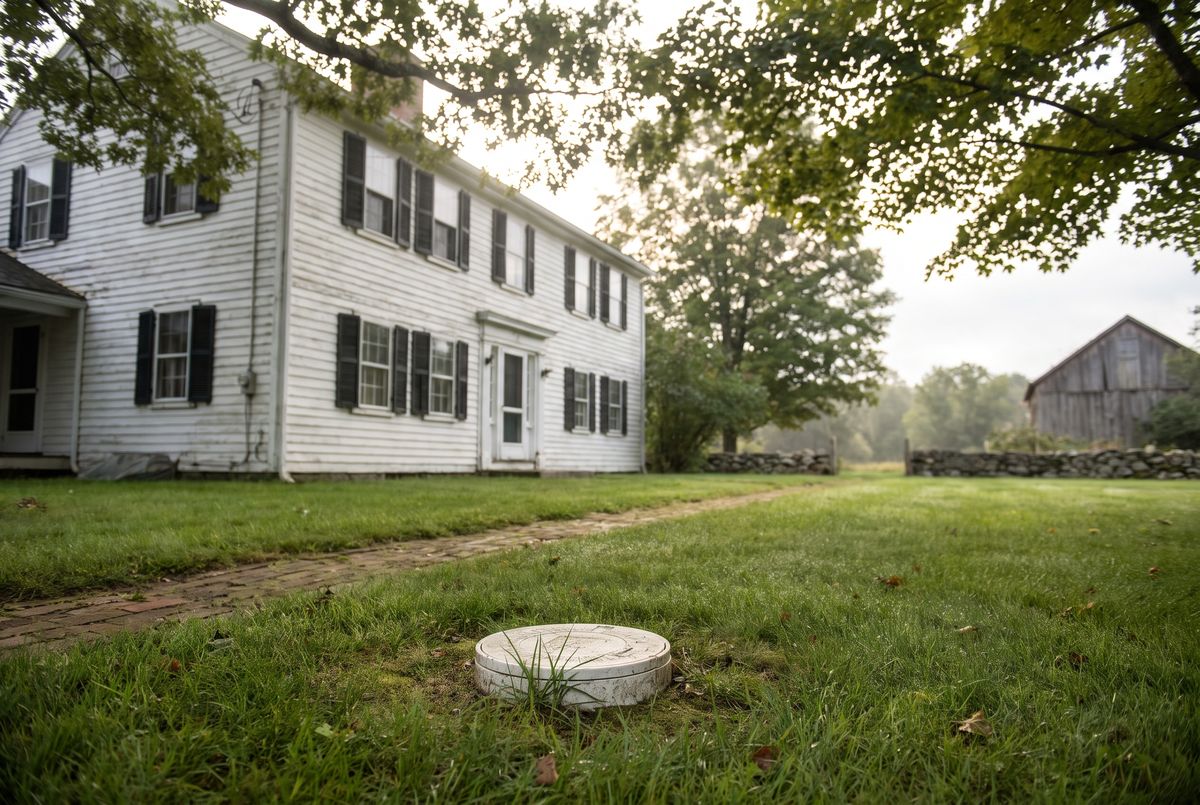
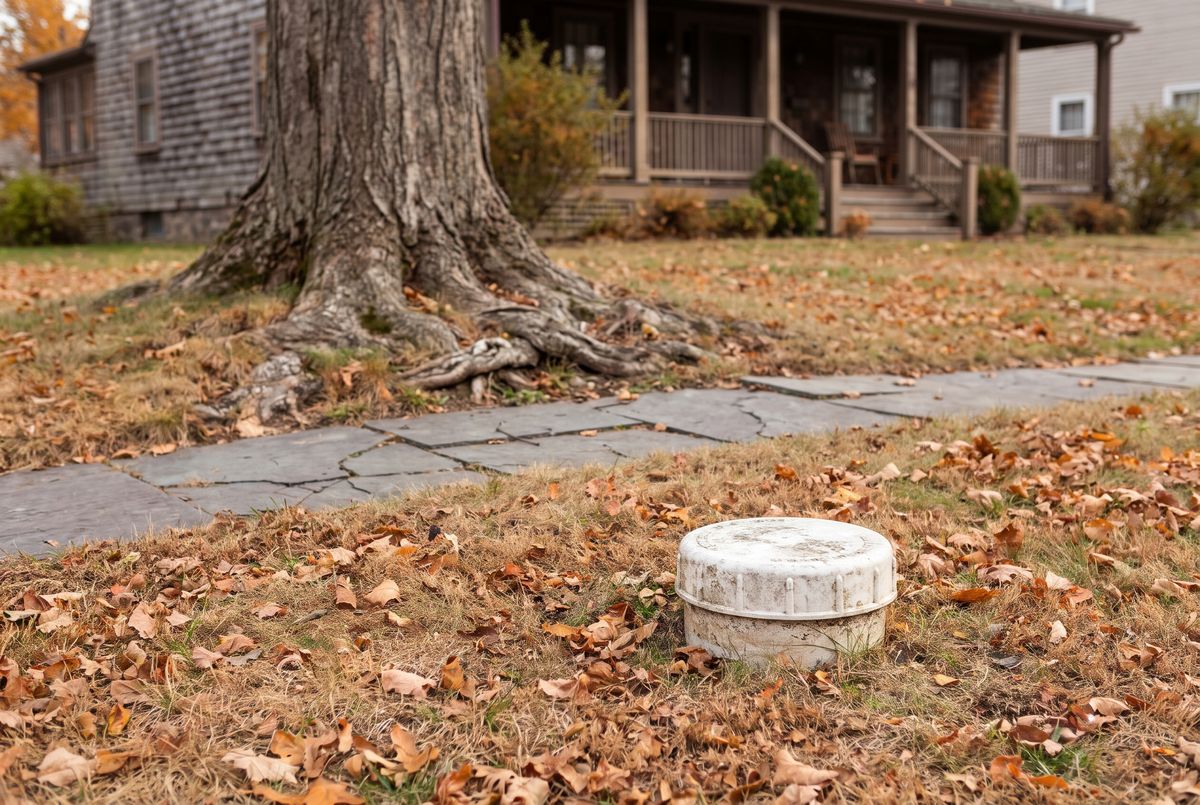
- Find where each buried pipe comes out. Look for an open pipe end in the lawn, at a slope or near the curb. If you can't find one, the pipe may run to a dry well.
- Clear the outlet. Grass, mulch and leaves often cover the far end of the pipe, and that alone can stop it draining.
- Lift the downspout out of the ground pipe if it sits loose in the opening, and pull out any leaves you can reach.
- Run a garden hose into the ground pipe for a few minutes. If the water rises back up to the top quickly, the water isn't getting away underground.
- If the hose water drains away, go and look at the outlet. Water coming out there means the line is moving.
A backup doesn't tell you exactly why. It's usually a blocked pipe, but where the line runs to a dry well, the dry well itself may have filled with leaves and silt. A hose rarely shifts what's packed in either one, so don't keep running it. That's the point to have the line looked at properly.
Call (203) 943-8722 for a free estimate on clearing the underground drain.
Call (203) 943-8722Why do fall leaves block downspout drains in Westport?
Because the leaves don't stay on the roof. Rain washes them into the gutters and down the downspouts, and they collect in the buried pipe, where mud and grit settle in with them. Over a few seasons that builds into a plug the water can't push through.
So the first hard rain after the leaves come down is often when a Westport yard or basement starts taking water. That's why the hose test is worth doing once the leaves are down, before the ground freezes.
When is the buried pipe damaged rather than clogged?
When the problem keeps coming back. If the gutters and downspouts are clear and the water still backs up at the ground, or the line clogs again soon after it's cleared, the pipe may be crushed, sagging or full of roots. Roots find the joints in a buried drain the same way they find a sewer line, and our guide to tree roots in the sewer line covers what roots do to a line and how they are dealt with.
Other clues are a soggy strip of lawn along the route of the pipe or a spot that sinks a little more each year. A camera inspection shows what's inside the pipe with no digging, and pipe locating marks where it runs if you don't know.
What does a wet basement wall have to do with it?
It tells you which downspout to test first. If the damp patch is on the same side of the house as a downspout that backs up at the ground, start the checks there.
If dirty water is coming up a floor drain instead, that's the sewer side, not the downspout, and the fix is different. Our basement flooding page explains how to tell which one you have.
Who clears underground downspout drains in Westport?
All Clear Sewer & Drain is Frank's company, based in Stratford. Frank and his crew handle gutter and underground drains for homes across Westport and Fairfield County: the gutters, the downspouts and the buried pipes they feed. Estimates are free, and if the pipe turns out to be damaged, you hear what fixing it involves and the price before any work starts.
Call All Clear at (203) 943-8722 for a free estimate in Westport.
Call (203) 943-8722